Background of the Revolution
The Haitian Revolution marked a critical moment in history as in 1804, the Haitian people won independence from France and became the first country to be founded by former slaves. The revolution was a series of conflicts between 1791 and 1804 involving Haitian slaves, British armies, and French colonizers.
The French-controlled Saint-Domingue colony was one of the richest colonies in existence, producing much of the world’s sugar and coffee. The colony was extremely polarized by skin color, class, and gender, with a makeup of about 90% African slaves, 6% European colonists, and 4% affranchis, slave owners of mixed African and European descent.
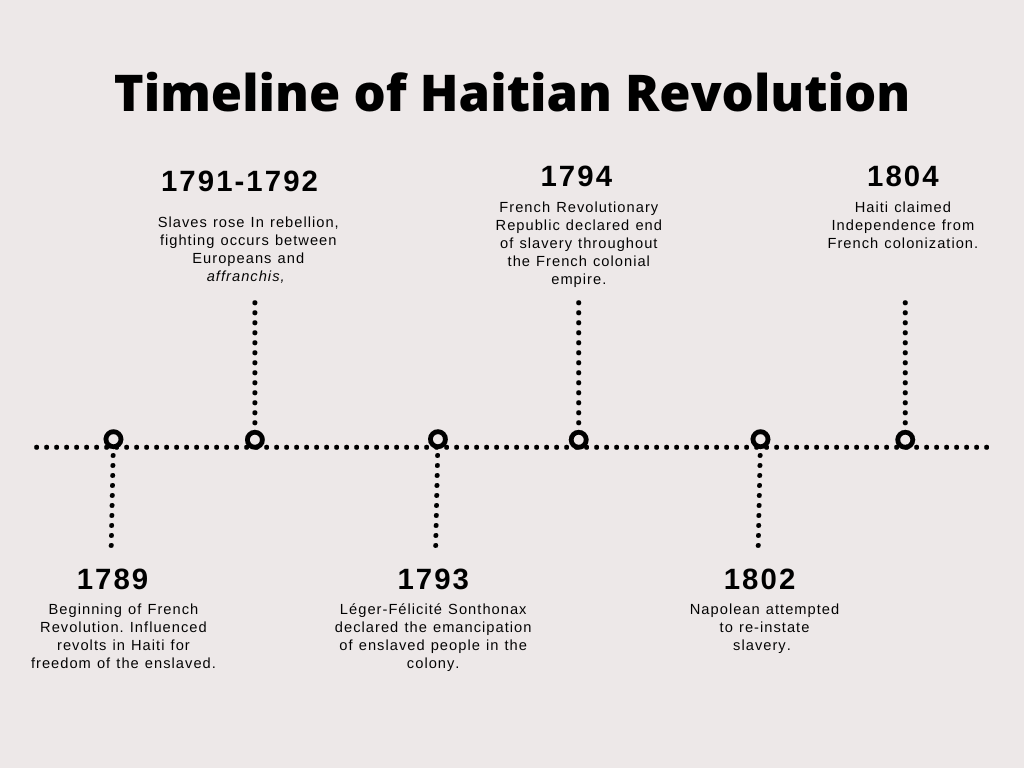
Amidst the French Revolution and conflict between the Europeans and affranchis, slaves rose in rebellion. In 1793, the French commissioner Léger-Félicité Sonthonax arrived at Saint-Domingue in response to the unrest and offered freedom to those who were willing to join his army. He soon declared the emancipation of enslaved people in the colony. Just a few months later, in 1794, the French Revolutionary Republic declared the end of slavery within Saint-Domingue and the entire French colonial empire. Despite this, in 1802, Napoleon attempted to re-instate slavery and was ultimately successful in much of the empire. However, Haitian slaves resisted these efforts and the Saint-Domingue colony fought back, claiming independence from French colonization and establishing itself as “Haiti.”

The Post-Revolution Effects
In 1804, Haitians declared their independence from France. Many people who believed themselves to be white and/or had economic interests in the maintenance and preservation of racialized chattel slavery were terrified of the possibility of the spread of revolutionary energy across borders and into plantations. This could lead to a legal reification of the specious racial categories that we generally accept today. This revolution recognized Haiti as the first Black Republic and the second independent Nation in the land now popularly known as the Americas.
Haitian Influence and Prominent Leaders
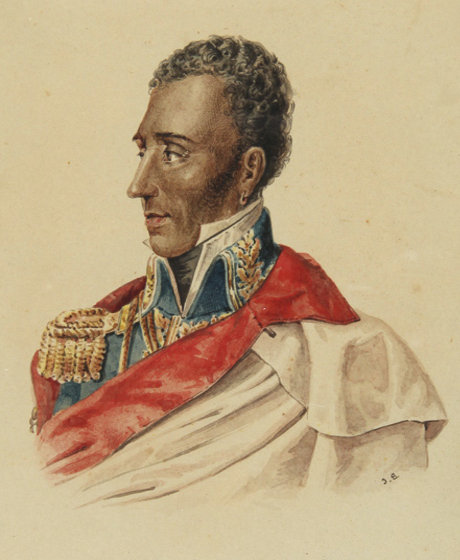
Immediate effects were felt strongly in the Caribbean. Eventually, this universal interpretation of the Revolutionary principles of Liberty, Equality, and Fraternity/brotherhood even made a significant impact in the United States by showcasing a new fate for enslaved people in Western society at that time. After the war, Haitian President Jean-Pierre Boyer promoted emigration in the U.S. newspapers, assuring enslaved blacks of Haiti’s promise as a free country for Africans and their descendants. It demonstrated courage and determination under extreme circumstances.
The Impacts on America and American Policies
Haiti’s act of self-emancipation inspired hope for a better future, and enslaved people in the South saw Haiti as a symbol of black freedom. In America, the revolution led to laws restricting manumission (freeing of enslaved people) and started an interest in deporting free blacks to distant colonies. One such example is Liberia, whose capital is Monrovia. Outrage over South Carolina’s reopening of the slave trade in 1803 strengthened the political drive to ban the American slave trade, which was achieved in 1808.
 OFoundation